 |
|
 |
 |
|
    Freedom for Tibet |
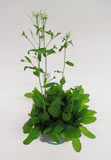
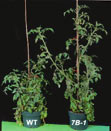
Welcome on website of Martin FellnerGroup of Molecular PhysiologyGroup of Molecular Physiology Tel: +420 - 58 563 4905 ResearchMartin Fellner received a M.Sc. degree from the Palacky University in Olomouc, where he worked on the investigation of insect reactions to various parts of electromagnetic radiation. His scientific career has started at the Institute of Experimental Botany of the Czech Academy of Science. From T-DNA mutant lines he isolated and analyzed auxin-response mutants in Arabidopsis thaliana to earn his Ph.D. at University of Paris XI in the lab of Prof. Jean Guern in CNRS (France). His post-doctoral studies on involvement of plant hormones in mechanisms of genic male sterility in tomato Lycopersicon esculentum and on the study of interaction between abscisic acid and light signaling were conducted in the laboratory of Prof. Vipen K. Sawhney in Department of Biology at the University of Saskatechewan in Saskatoon (Canada). During his second post-doctoral position at the University of Washington in Seattle (USA) he studied interaction between light and hormone signaling in growth and development of corn leaves in the laboratory of Prof. Elizabeth Van Volkenburgh at the Department of Biology. After returningto home country in 2003, he got a position in Palacky University Olomouc and in the Institute of Experimental Botany, Czech Academy of Sciences. The Group of Molecular Physiology has been set up in the spring of 2005 at the Department of Cell Biology and Genetics in the Faculty of Science at Palacký University in Olomouc. From January 2011, the group is the part of Laboratory of Growth Regulators of the same faculty. The projects resolve around the idea that a greater understanding of cross-talk between hormone, abiotic stress and light signaling pathways will provide new insight into complex processes of plant growth and development. As a genetic approach, mutant collections are used including tomato, Arabidopsis and maize. Tomato mutant 7B-1 tolerant to salt and osmotic stress specifically under blue light is an excellent plant model that let us to the idea of studying the role of light in the ability of plants to tolerate abiotic stress, and provides a possibility to reveal a new elements implicated in light and stress signaling pathways. In addition, the current research projects are focused on the study of involvement of hormones, anion channels and aquaporins in plant photomorphogenesis. In the course of these studies, the Fellner’s group uses various techniques of plant physiology, genetics, and molecular biology. TeachingFrom 2005 to 2011, Dr. Fellner tought lectures of Plant physiology, Plant molecular biology, and Molecular physiology. He was also responsible for four Special seminars. From January 1, 2011, he teaches Special plant physiology, Molecular physiology, Molecular plant physiology, Celebrities of plant physiology, Plant growth and development, and three Special seminars. |









| Original design Webmaster |
MARTIN FELLNER, Laboratory of Growth Regulators | Modified: September 26, 2025 |